
A slab with a picture on it
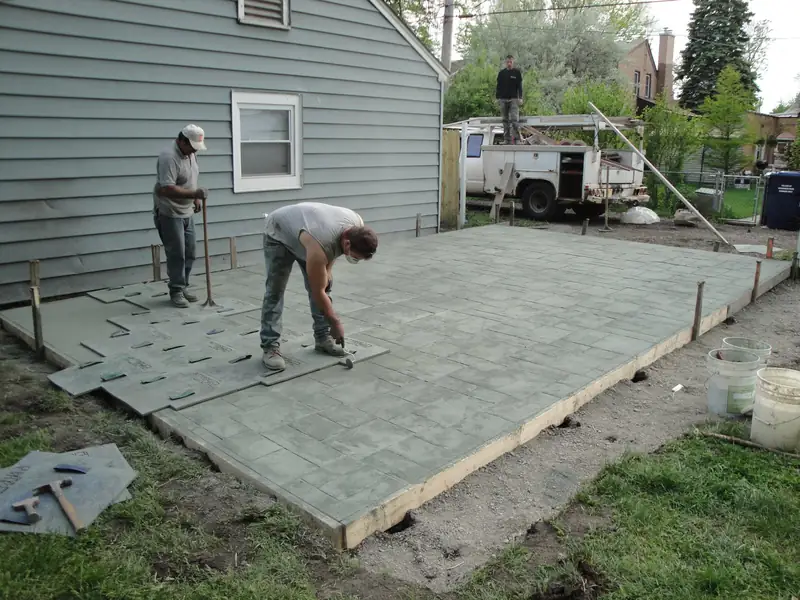
Imprinted concrete starts as ready-mixed concrete. The gang place it, level it, add colour, press polyurethane mats into the surface and later wash off a release agent. A sealer is often applied so the colour stays. The pattern can mimic setts, slabs or a fan. From a distance it reads as paving. Up close it is one piece of concrete with pressed lines, not separate units with sand joints.
The photograph above shows a pattern mould being pressed into fresh concrete. It is not a Hull driveway and it is not a finished surface.
Because it is a pour, the area has to be ready on the day the wagon comes: base complete, edges formed, access clear. A street of parked cars can make the chute impossible. Say so when you describe the job, or the quote will assume a clear entrance.
Movement, which clay does not forgive
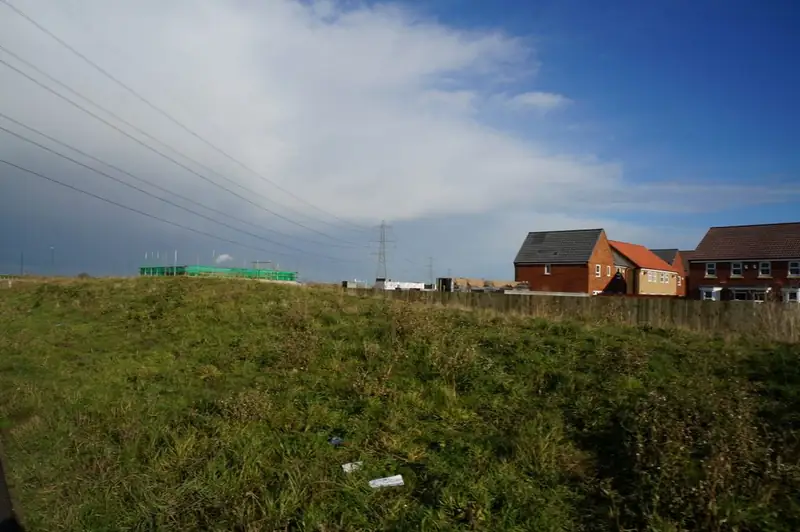
Concrete cracks if the ground under it moves and the slab has no joints to crack along instead. The BGS report on Hull describes widespread till and tidal clay and silt. Those soils change volume with water. A printed slab on a thin bed of sand over that ground is a gamble. A proper crushed-stone base, adequate thickness, and joints at a sensible spacing are the specification to ask for. "Fibres in the mix" is not a substitute for joints.
Blocks can be lifted and re-laid if a section settles. A printed slab is repaired as concrete: the patch rarely matches the mat pattern. That is the trade-off people miss when they compare a printed price with a block price.
Colour and sealer
Integral colour and a surface hardener are different products. The sealer wears and is sometimes sold as a return visit every few years. Ask whether that visit is in the quote or is a later extra, and what happens if you do not reseal. A pale pattern shows tyre marks more than a dark one. Neither is a stain-proof promise.
Mats have names. Two firms can both say "cobble" and press different textures. If the look matters, ask to see a mat or a nearby slab they have already done, and remember that a nearby slab is their example, not a Hull Driveways project. This site has no portfolio.
Planning and the kerb
A printed concrete surface is impermeable unless a separate drainage design says otherwise. The Planning Portal's front-garden guidance is the national rule to read, and the planning guide applies it to Hull. The public crossing is not printed concrete. Hull's council page says crossings are usually tarmac. Price the garden and the crossing as two lines. Orchard Park and Kingswood are inside Hull, so the city council's crossing rules apply there. They are not conservation-area show streets, which removes one constraint and leaves the ground and the drainage.
Questions about imprinted concrete in Hull
Is it cheaper than blocks?
This site does not publish a comparison table of prices. On a simple rectangle, a pour can be quicker than laying hundreds of blocks. On a garden full of manholes and odd corners, the cuts and the day-rate of a concrete gang can remove that advantage. Get both types priced through the form if you are actually choosing.
Can it be done in winter?
Concrete has temperature limits. A responsible quote will say what happens if the day is freezing. Do not accept a date that ignores that.
Are you the company with the mats?
No. Hull Driveways does not own moulds or wagons. The request is passed to professionals who do.
Sources: BGS urban geochemistry report for Kingston upon Hull (NERC IR/02/080); Planning Portal: paving your front garden; Hull City Council dropped kerbs.