Bound, not bonded
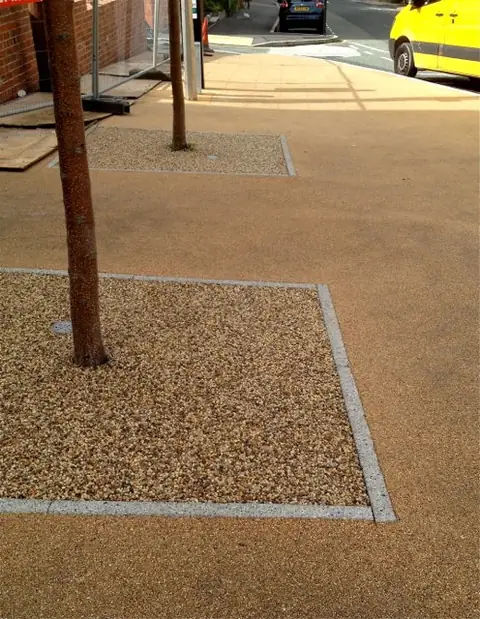
Two products share the word resin and behave differently. Resin-bound mixes the stones and the resin together, then spreads that mix so the surface is a consistent layer with small voids. Resin-bonded scatters loose stones onto a wet resin film, so the stones sit on top and some of them come away under shoes and tyres. If a quote only says "resin driveway", ask which of the two is priced. In Hull the bound system is the one people usually mean when they want a neat, weed-resistant finish that still looks like gravel.
The photograph above is resin-bound gravel at Hopes Carr in Stockport. It is not a Hull driveway, and it is not a job from this website.

The base is the drive
A resin-bound layer is often around 15 to 18 mm for a footpath and thicker for vehicles, but the number only means something on top of a stable base. Typical bases are a new asphalt surface or an existing concrete slab that is sound, clean and profiled to a fall. If the base moves, the resin cracks. If the base ponds, the resin sits in water and the bond suffers.
The BGS urban report describes widespread till, alluvium and tidal clay, silt and sand under Hull. A soft formation needs the same serious excavation as a block drive before anyone talks about stone colour. A quote that prices only the resin, and treats the base as "existing, assumed suitable", is incomplete until someone has seen the garden.
Rain in a low city
Hull's flood strategy describes a city on reclaimed marshland, with surface water a known problem. A resin system can be specified as permeable, so water passes through the layer and the base into a suitable formation, or as a sealed system that sends water to a channel or a planted border. Permeable resin is not a magic soakaway on heavy clay. If the ground under the base will not accept water, the permeable label does not remove the need for somewhere for rain to go.
The Planning Portal's front-garden rule still applies. More than five square metres of impermeable surface that drains toward the highway can need planning permission. A permeable resin specification is one way firms try to stay within permitted development. Ask for the manufacturer's description of the system, not a verbal "it's SUDS".
Colour, UV and the entrance
Aggregate colour is a sample-pot decision: buff, grey, red, a mix. Resin can amber in strong sun if the product is not UV-stable. Ask whether the resin is aliphatic (the usual UV-stable claim) and get that word on the quote. A dark aggregate hides the ambering better than a pale one, but the product claim matters more than the colour.
At the entrance, resin should meet the footway cleanly. A metal or timber edging, or a brick border, stops the layer crumbling at the edge. The highway crossing itself, if you need a dropped kerb, is still the council's process. Resin is not usually the material the council wants on the public footway. Hull's dropped-kerb page says crossings are usually tarmac, with other materials only if they fit the street. See dropped kerbs.
Streets such as Marlborough Avenue sit in a conservation area. A smooth modern resin court in front of an older house is allowed only if the planning rules for that street say so. The area pages for The Avenues and Garden Village cover the extra controls.
Comparing resin quotes
Line up the base (new asphalt, new concrete, or a named existing slab), the resin type, the depth of the bound layer, the edging, and where the water goes. Ignore a price gap until those lines match. This website does not publish a resin price and does not recommend a brand.
Questions about resin drives in Hull
Can resin go over old tarmac?
Only if the tarmac is stable, well drained and prepared. A tired, cracking surface will print those cracks through the resin. A professional should say whether they will overlay or plane off and start again.
Is it slippery?
A well-specified bound surface uses angular aggregate so it is not a polished floor. Moss in a shaded side return is a maintenance issue on any surface. Ask what the aftercare note says.
Does Hull Driveways supply the resin?
No. Any order for materials is with the professional you appoint, or with their supplier. The form further down is a quote request, not an order from this website.
Sources: Planning Portal: paving your front garden; BGS urban geochemistry report for Kingston upon Hull (NERC IR/02/080); Hull City Council local flood risk management strategy.